Back
How Building Material Companies Can Increase Sales Through Loyalty Programs
See how loyalty programs help building material companies grow sales, engage dealers and contractors and drive repeat purchases with UPI cashback.
Building material companies operate in a competitive market where dealers, distributors, contractors, and retailers often have multiple brands to choose from. Product quality and pricing remain important, but strong channel relationships can also influence which products are stocked, recommended, and purchased.
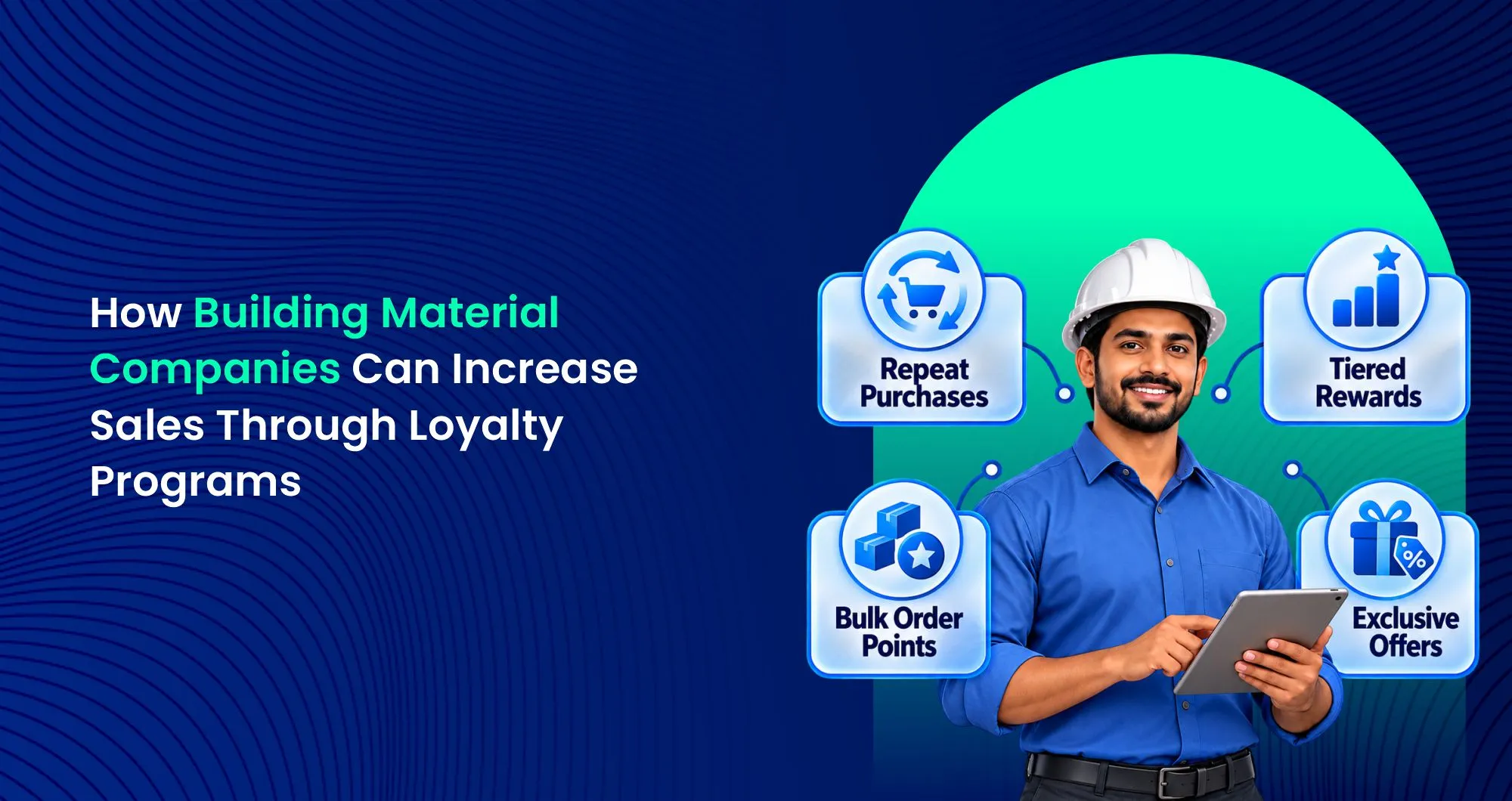
This is where loyalty programs for building material companies can support a broader sales strategy. A well-planned program, using rewards such as UPI cashback, can encourage repeat purchases, improve product movement, engage channel partners and give brands better visibility into purchasing behaviour.
However, simply offering points or UPI cashback does not guarantee results. . The program needs to be easy to use, relevant to each channel role and connected to measurable business goals.
Why Loyalty Matters in the Building Materials Industry
The building materials industry has a multi-layered buying and distribution structure. The person who purchases a product may not be the person who recommends or uses it.
A typical channel may involve:
Manufacturers and brands
Distributors
Dealers
Retailers
Contractors
Builders
Applicators and installers
Each group has different priorities. A dealer may respond to purchase targets, while a contractor may be more interested in product-based rewards. A distributor may be focused on volume and territory performance.
A loyalty program gives brands a structured way to engage these different participants. Instead of using one generic incentive for everyone, companies can create campaigns based on the role, product, and behaviour they want to encourage.
How Loyalty Programs for Building Material Companies Can Increase Sales
Loyalty programs for building material brands should have a clear commercial objective. For building material companies, that objective may be increasing repeat purchases, improving product movement, strengthening dealer relationships or encouraging adoption of selected products.
Encourage Repeat Purchases
Rewards can give dealers, contractors and other eligible partners an additional reason to continue purchasing from a brand.
For example, a company could create a monthly campaign where qualifying purchases contribute toward a UPI cashback reward or milestone.
Loyalty should complement product quality, pricing, availability and service rather than replace them. When these fundamentals are strong, incentives can provide another reason for channel partners to remain engaged.
Increase Product Movement
Building material companies often have multiple products and categories, and not every product has the same business priority.
A brand may want to increase sales of a new product, premium range or particular SKU. A loyalty campaign can provide additional rewards for eligible purchases of those products.
This makes incentives more closely connected to sales objectives instead of rewarding every product in exactly the same way.Improve Dealer Engagement
Dealers are an important connection between building material brands and customers.
A structured dealer loyalty program can help companies recognise purchasing behaviour, communicate promotions and encourage dealers to work toward specific targets.
For example, a campaign could reward dealers for achieving monthly purchase milestones or increasing the movement of selected product categories.
The goal is not simply to give rewards. It is to create a measurable engagement mechanism between the brand and its channel partners.Encourage Cross-Selling
Many building material companies offer complementary products that can be used together.
A loyalty program can encourage dealers or contractors to explore a wider product range by offering additional rewards for selected categories or combinations.
For example, a company could create a campaign that encourages participants who regularly purchase one category to also try another related product.
This can help brands promote products beyond their established bestsellers.Support New Product Launches
New products can face resistance when dealers and contractors are already comfortable with established brands.
A targeted incentive can encourage channel partners to try, stock or purchase a new product.
For example, a brand launching a new construction chemical could offer additional rewards for qualifying purchases during the initial campaign period.
The incentive should work alongside product education, sales support and distribution rather than act as the only launch strategy.Strengthen Contractor and Influencer Engagement
Contractors, builders, applicators and installers can influence which products are selected or used on projects.
A contractor loyalty program can give brands a structured way to maintain engagement with these groups.
Depending on the product and campaign, rewards may be linked to purchases, product usage, milestones or other qualifying activities.
The key is to design the program around the participant's actual role rather than treating every channel partner in the same way.
Which Channel Partners Should Building Material Companies Reward?
Different participants contribute to the sales process in different ways, so separate reward structures may be more effective.
Dealers
Dealer incentives can focus on:
Purchase targets
Product movement
Monthly milestones
Selected product categories
Repeat purchases
Distributors
Distributor programs can focus on:
Sales volume
Territory performance
Category targets
Achievement milestones
Campaign-based incentives
Contractors and Builders
Depending on the product category, programs can reward:
Product purchases
Product usage
Repeat engagement
Project-related activity
Product trials
Retailers
Retailer incentives may focus on:
Stocking selected products
Sales targets
Product movement
Repeat purchases
Promotional participation
This role-based approach allows a company to run a broader channel partner loyalty program without forcing every participant into the same scheme.
Loyalty Strategies Building Material Companies Can Use
Different business objectives call for different reward models.
Points-Based Programs
Participants earn points through qualifying purchases or activities and redeem them later. This can work well for longer-term engagement.
Instant UPI Cashback
UPI cashback provides a direct and easy-to-understand reward for qualifying activity. It can be particularly useful when brands want to keep the redemption process simple.
Target-Based Incentives
Participants receive a reward after reaching a defined sales or purchase target. This can encourage higher volumes over a specific campaign period.
Tiered Rewards
Participants move through different levels based on their activity. Higher achievement can unlock additional benefits or rewards.
Milestone Rewards
Rewards are provided when participants reach defined milestones. This can encourage continued activity throughout a campaign.
Product-Specific Incentives
Rewards can be linked to selected products or SKUs. This gives brands greater control over which products they want to promote.
The best approach depends on the audience, product category and objective of the campaign.
Make the Loyalty Program Easy to Use
A loyalty program cannot influence behaviour if channel partners do not use it.
Dealers, contractors and field users are often busy and may not want to spend several minutes completing a complicated claim process.
A user-friendly program should consider:
Simple registration
Mobile-friendly access
Easy product or code scanning
Clear reward information
Straightforward redemption, including UPI cashback
Accessible transaction history
Simple campaign rules
Timely communication
The basic principle is simple: the fewer unnecessary steps participants have to complete, the easier it is to encourage adoption.
Before launching a campaign across a large channel network, test the process with real dealers, contractors or other intended users.
How Technology Simplifies Loyalty Program Management
Managing a large loyalty campaign manually can involve spreadsheets, physical coupons, manual claims, and separate reporting systems.
As participation increases, these processes become difficult to manage consistently.
Building a loyalty software platform can bring important activities into a single system, including:
Participant onboarding
Campaign configuration
Product and SKU management
Reward management, including UPI cashback
User segmentation
Role-based campaigns
Transaction tracking
Code verification
Redemption management
Fraud controls
Reporting and analytics
Technology also gives marketing and sales teams greater visibility into campaign activity.
Instead of waiting for manual reports, teams can monitor participation, product performance, and reward activity more efficiently.
Protect the Program From Fraud
A loyalty program also needs controls to protect the company's incentive budget.
Potential risks include:
Duplicate claims
Reused product codes
Fake codes
Multiple accounts
Invalid transactions
Unauthorised redemptions
Depending on the platform, businesses can use measures such as:
Unique product codes
Product authentication
Duplicate detection
User verification
Transaction monitoring
Redemption controls
Fraud prevention should be considered during the campaign design stage, particularly when rewards have direct monetary value.
How to Measure Loyalty Program ROI
Registrations alone do not tell you whether a loyalty program is successful.
Building material companies should track metrics connected to their actual business objectives.
Useful KPIs include:
Active participants
Dealer participation
Contractor participation
Purchase frequency
Repeat purchases
Product and SKU movement
Redemption rate
Average transaction value
Reward cost
Incremental sales
Campaign ROI
For example, a campaign may generate a high number of registrations but very few transactions. That could indicate an issue with the reward structure, communication or user experience.
The focus should therefore be on measurable behaviour and business outcomes, not simply the number of people enrolled.
Common Loyalty Program Mistakes to Avoid
Complicated Reward Rules
Participants should be able to understand how they earn and redeem rewards without lengthy explanations.
One Scheme for Everyone
Dealers, distributors, and contractors have different roles and objectives. Separate schemes can make incentives more relevant.
Focusing Only on Registrations
A large database does not necessarily mean high engagement. Monitor active users and actual transactions.
Ignoring User Experience
Complicated registration and redemption processes can discourage participation.
Disconnecting Rewards From Sales Goals
Every campaign should answer a simple question: What behaviour are we trying to influence?
Neglecting Fraud Controls
Weak verification can increase campaign costs and reduce the reliability of your data.
Choosing Software Only for Its Feature List
The most important platform is not necessarily the one with the most features. Evaluate usability, flexibility, reporting, and implementation support as well.
What to Look for in Loyalty Program Software
Before selecting a platform, building material companies should ask vendors:
Can the platform support dealers, distributors and contractors?
Can separate schemes be created for different user roles?
Can rewards be configured by product or SKU?
Does it support points, UPI cashback and target-based incentives?
Is the platform easy to access on mobile devices?
How are products and transactions verified?
What fraud-prevention controls are available?
What campaign data can the brand access?
Can reports be filtered by product, location, and user type?
How quickly can campaigns be configured and launched?
What onboarding and support are included?
These questions help businesses evaluate whether a platform can support both the user experience and operational requirements of a large loyalty campaign.
How Verify App Can Support Building Material Loyalty Programs
Verify App provides a digital platform for brands to manage loyalty and incentive programs.
For building material companies, relevant capabilities include:
Multiple user roles within one program
Flexible incentive and reward structures, including UPI cashback
Product and SKU-based campaigns
Target-based programs
Digital product and transaction verification
Campaign tracking
Duplicate detection and fraud controls
Reporting and analytics
These capabilities can help brands manage dealer, distributor, contractor and other channel programs through a structured digital system.
The right configuration will depend on the company's product portfolio, channel structure, campaign objectives and reward strategy.
For brands evaluating loyalty program software for building material companies, a practical product demonstration can help them assess the user journey, campaign controls and reporting capabilities before launch.
Frequently Asked Questions
How can loyalty programs increase sales for building material companies?
A: Loyalty programs can encourage repeat purchases, improve product movement, strengthen dealer and contractor engagement and support targeted product promotions. Their results depend on the reward structure, product availability, pricing, communication and ease of participation.What rewards work for building material dealers?
A: Depending on the campaign, dealers may respond to UPI cashback, points, purchase-based rewards, target incentives and milestone programs. The most suitable reward depends on the dealer's purchasing behaviour and the business objective..Can companies create separate loyalty programs for dealers and contractors?
A: Yes. A digital loyalty platform can support separate schemes for different channel roles. Dealers may have sales or purchase targets, while contractors may participate through product purchases, usage or other qualifying activities.Can loyalty programs promote specific building material products?
A: Yes. Product- or SKU-specific incentives allow companies to direct rewards toward selected products, categories or new launches instead of applying the same reward to their entire portfolio.How should a building material company measure loyalty program success?
A; Companies should track active participation, repeat purchases, product movement, redemption rates, channel engagement, reward costs and incremental sales. These metrics provide a better indication of campaign performance than registrations alone.What should companies consider when choosing loyalty software?
A: Look for simple participation, flexible campaign management, role-based schemes, product-level controls, verification, fraud prevention, reporting and reliable implementation support. The platform should fit the way your channel partners actually work.
Final Takeaway
For building material companies, a loyalty program should be more than a points or UPI cashback scheme.
It can become a structured channel-growth strategy that helps brands engage dealers, distributors, contractors, and other partners while encouraging specific purchasing behaviours.
The process should start with a clear objective: What behaviour do you want to encourage?
It could be repeat purchases, higher sales volumes, new product adoption, greater movement of a strategic SKU, or stronger channel engagement.
Once the objective is defined, the company can choose the appropriate reward structure, simplify participation, and track measurable results.
With the right technology, brands can manage participants, products, incentives, verification, and reporting from a central platform.
For companies evaluating their options, Verify App can be considered as part of the vendor selection process. The best way to assess any platform is to test the complete user journey and determine whether its capabilities align with the company's channel strategy and sales goals.

Verify App Editorial Team

Growth Marketing Specialist
We are a team of product experts, compliance professionals, and growth specialists dedicated to creating secure, scalable, and data-driven customer engagement solutions. With practical experience in UPI-based loyalty programs, CRM integrations, and digital verification tools, the team provides clear and actionable insights that help businesses build customer trust, increase retention, and improve operational efficiency. Every article is supported by industry research and real-world examples from both Indian and global markets.
Connect With Our Experts Today!
Latest posts
Discover other pieces of writing in our blog